Loading article…
Back to Blog
RWA
The common failures of Tokenization in 2026
This is the most common failure in tokenization architecture in 2026.
B
Blockphrase Team
Admin · June 26, 2026 · 5 min read
A founder showed us his tokenization platform last month.
Real estate "fully on-chain."
I asked one question.
How is this structured with the building ownership in mind? Oh doy!
This is the most common failure in tokenization architecture in 2026.
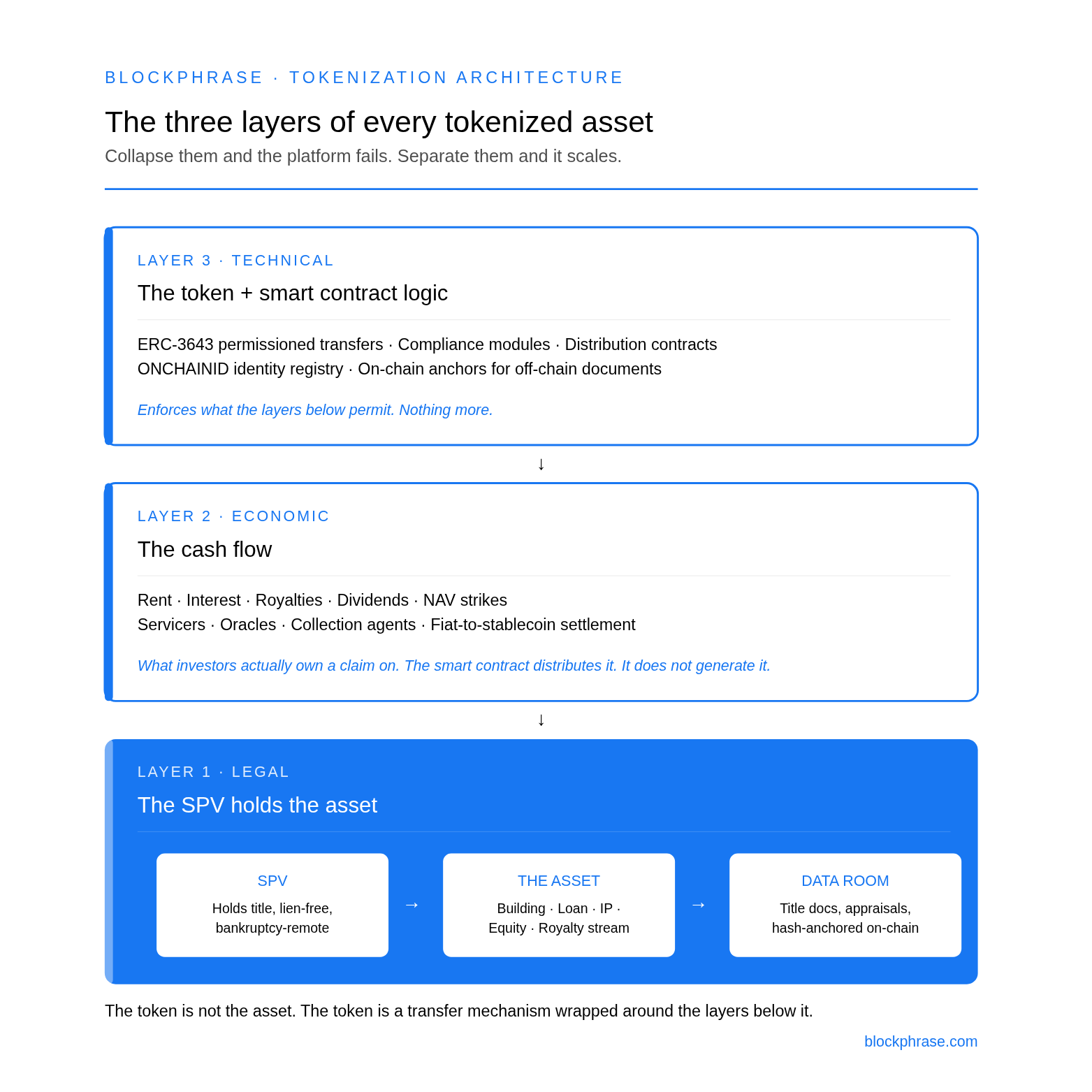
Teams build the token/technology without building the three layers underneath it.
1/The legal layer.
The SPV that actually holds the asset & if a court orders a freeze, this is where the order executes.
2/The economic layer.
The cash flow such as rent, interest, royalties, dividends. What investors actually own a claim on.
3/ The technical layer.
The token and its smart contract logic such as ERC-3643, compliance modules. distribution contracts and more!
The technical layer enforces what the first two layers permit.
Nothing more.
When teams collapse these layers, three things happen.